
Would you like to know whether treatment could be appropriate for your situation?
Just give me a call: 01575 474 55 94
Liver
The liver is an extremely important and remarkably quiet organ. Stress and functional disturbances can persist for a long time without causing clear symptoms.
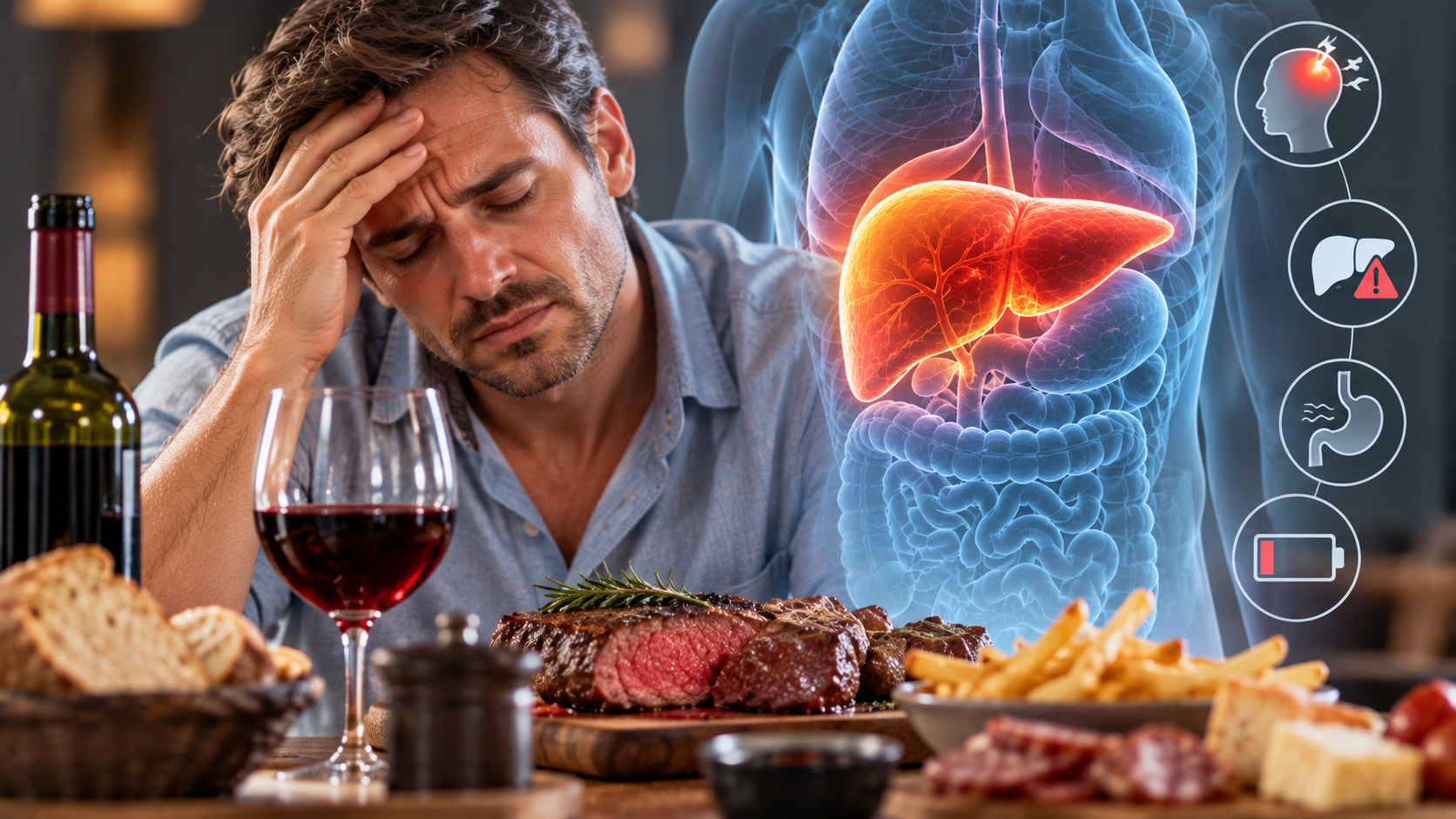
The liver tissue itself is largely insensitive to pain. As a result, problems often do not cause pain directly in the liver, and strain on the organ may go unnoticed for a long time. Only when more significant changes occur or the liver becomes enlarged may symptoms such as pressure or pain in the upper right abdomen develop.
Possible signs associated with impaired liver function can vary considerably. Fatigue, changes in the skin, changes in weight or reduced physical capacity may occur, for example. Non-specific symptoms such as concentration problems or headaches can also occur, although these are by no means automatically related to the liver.
As a Frenchman and the son of a restaurant chef, this is a subject that is personally very familiar to me as well.
A well-functioning liver contributes significantly to health and well-being. Together, we look at which potentially harmful factors you can avoid and how you can best support this important organ.
Why the liver is so important
The liver performs a wide range of vital functions. Among other things, it is involved in the metabolism of carbohydrates, fats and proteins, stores glycogen and various nutrients, produces important proteins and processes numerous substances originating both inside and outside the body.
It also plays an important role in digestion: the liver produces bile, which is particularly important for the digestion and absorption of fats.
In addition, the liver plays a major role in breaking down and transforming numerous metabolic products, medications and other substances. In everyday language, this is often referred to as the liver’s “detoxification function”.